

With getting older comes a list of things that start to become more difficult to complete. One of these is gift-giving. As age increases, it gets harder to ensure that the perfect gift is being given.
Studies show that a person over the age of 55 is more than twice as likely to consider themselves not a good gift-giver compared to those in younger age groups, such as those in their 20s and 30s. There can be many reasons why increasing age brings difficulty in being a good gift-giver.
Why Your Corporate Gifts Are Failing (And How to Fix It) - Watch our TEDx Talk

The reasons explored in this paper are due to the impact of the hippocampus and frontal lobe with increasing age. The hippocampus is a structure in the brain responsible for learning and memory. It is located deep in the temporal lobe and is vulnerable to impairment due to various stimuli, including age.
Cognitive changes that occur in the hippocampus and frontal lobe with increasing age bring a decline in the performance of cognitive tasks. Performing a cognitive task, such as gift-giving, requires the ability to process or transform information to make decisions and use measures such as processing speed, working memory, and executive cognitive function to achieve the task.
Studies have shown that the mass of the brain decreases with age, and the structures affected include the frontal lobe and hippocampus.
The frontal lobe is responsible for critical thinking and decision-making, while the hippocampus is responsible for the storage of memories.
With both structures being affected and shrinking with age, tasks like gift-giving become more difficult than they would have been at earlier ages.
The Columbia Mailman School of Public Health states that in our 30s and 40s, the brain begins to shrink, and the rate of shrinkage increases even more when approaching the age of 60.
When it comes to gift-giving, many factors play a role in successfully completing the task of choosing a gift.
How We Use Data to Pick Gifts People Actually Keep

First comes the thought of what the gift should be. This involves the cognitive functions of the frontal lobe to decide what gift should be purchased and given.
Having a wide range of gifts available can create more difficulty in deciding. As mentioned before, the frontal lobe is responsible for decision-making, and with increasing age, decision-making ability declines. This process may become more lengthy than a simple task to complete.
Memory also plays a significant role in gift-giving, as it is needed to recall what the recipient would like or dislike in order to give a suitable gift.
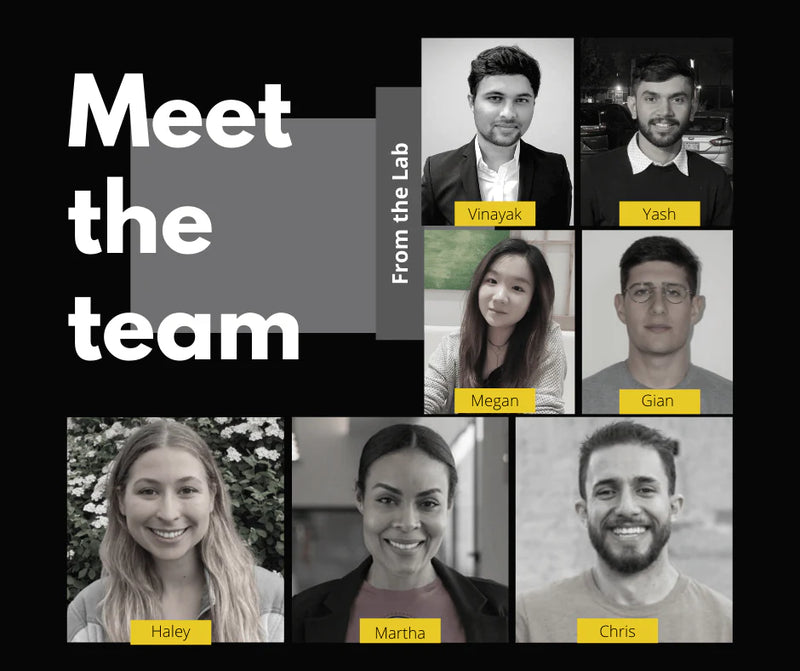
Research Fellowship
Opportunity
Most psychology students spend four years and $40,000 just to end up with a degree and zero real-world leverage. We’re changing that. At The Shared Secrets Lab, we give you the "Published Edge", a citable paper in the Journal of Gift Psychology that puts you in the top 1% of PhD applicants globally.
This isn’t a "coffee-runner" internship; it’s a backstage pass to the world’s #1 gifting-psychology R&D lab where you build a multichannel portfolio that makes you un-ignorable to future employers (including working full time with our lab). If you want a resume that actually works as hard as you do, apply now and stop researching in a vacuum.
Regardless of age, gift-giving is not a task done with ease. However, with age, it becomes more of an obstacle due to the combined effects of cognitive factors involved in completing the task.
Essentially, the impact of age on cognition must be considered when examining the difficulty that arises during gift-giving.
.The hippocampus is also responsible for learning. Another factor that helps in gift-giving is learning what the recipient may be fond of when receiving a gift.
However, with the hippocampus being affected by age, there is an increased chance of not being able to thoroughly learn and remember information that would make the gift-giving process easier.
For instance, during the holidays, gifts from grandparents are often a hit or miss, and most of the time it is a miss. This is due to impairments from the shrinkage of the frontal lobe and hippocampus.
In many cases, older adults include a gift receipt with their gift in case the recipient wants to exchange it. Receiving an unwanted gift from an older adult, whether a family member or a friend, often leads to the present being re-gifted, returned or exchanged, or tucked away in the back of a closet.
Especially when there are festive occasions such as the holidays that there is an increased chance of unwanted gifts from older adults. Research has shown that nearly half of those who are in their fifties, which is approximately 48%, have reported enjoying festive shopping less than they used to.
The evidence of these studies demonstrates that increasing age brings frustration to completing tasks such as gift-giving.
The results of the study suggest that every year we become older, it doesn't get easier, instead, it becomes more difficult. In conclusion, with growing age comes a struggle with gift-giving.
There are main factors that play a role in completing such a cognitive task such as the function of the hippocampus and the frontal lobes.
With increasing age, comes a decline in the functionality of those structures which impact the process of carrying out tasks such as gift-giving.
The shrinkage of the hippocampus and frontal lobe with age affects decision-making, learning and memory which are key components that play a significant role in the process of getting the perfect gift for someone.
In essence, there is a great amount of brain power that comes with the process of gift-giving that with age becomes more of an obstacle than a simple task to cross off the list.
Although there is a shift in confidence when it comes to gift-giving at an older age, it does not mean that older adults are doomed to give the worst gifts.
It just means that there needs to be a lot more time and effort to be put in to accomplish the task due to the cognition changes that take place when older.
Naseea Harun
Psychology Blogger,
The Shared Secrets Lab,
GiftAFeeling Inc
Read The Official Research Paper On - Gift-giving becoming difficult with Age
The Shared Secrets Lab
GiftAFeeling's Shared Secrets Lab (TSSL) is the world's #1 R&D lab focusing in gifting-psychology, particularly corporate gifts, promotional products, and branded merchandise. Led by industry SMEs, globe thought leaders, and psychologists, TSSL helps organizations pick products that are meaningful and kept, rather than getting tossed out!


