

In the previous article, “Why Brands Should Give Giveaways,” we discussed the types of giveaways and the benefits of promotional products for businesses.
It is a cost-effective strategy to boost sales, increase website traffic, enhance brand awareness, and improve customer satisfaction.
Once a company has defined its giveaway goal and entry method, the next task is selecting the right giveaway product for its target audience.
Geographic segmentation is a type of marketing strategy that groups customers based on their geographic locations.
This can include factors such as climate, population density, culture, and whether an area is urban or rural. It is an effective approach commonly used by large-scale organizations and companies.
Since customers in different regions have varying needs and cultural characteristics, geographic segmentation provides clear direction for marketing activities.
It helps businesses focus on areas that will benefit the most from their campaigns. Furthermore, this segmentation strategy is also suitable for small companies.
By concentrating on defined areas and targeting specific customers, companies can avoid spending unnecessary marketing budgets on approaches that do not align with their customer base. There are many ways to help a company develop a geographic segmentation strategy:
Why Your Corporate Gifts Are Failing (And How to Fix It) - Watch our TEDx Talk

Survey
This method helps identify your target market and understand customers’ needs and preferences. It is one of the most effective ways to gather qualitative feedback from the market.
Surveys allow you to create open-ended questions and targeted messaging to gain deeper insights, which can lead to increased sales.
Whether a company sells products directly to individual consumers or provides services to other businesses, a well-structured survey can provide valuable contextual knowledge.
It also simplifies geographic segmentation analysis by clearly highlighting regional differences in customer behavior.
Sales and Website Data
If your business has multiple branches or operates as a conglomerate, you can examine operational sales data for each branch.
This helps you track how sales have increased or decreased across different regions and countries. In addition, website data can help you better understand your customers and their needs.
For example, tracking users’ IP addresses and analyzing the keywords they search on your website can help identify the regions and specific countries they belong to.
Collecting and analyzing this data helps uncover the geographic distribution of your target market and improves overall marketing strategies.
Giveaways and Promotional Products for Different Geographical Areas in Canada and the USA
The type of giveaways can vary depending on geographic location. In the United States, sweepstakes are commonly used.
However, it is important to note that hosting a giveaway involves specific laws and regulations to ensure the promotion is legal. Lotteries in the U.S. are controlled by a combination of state and federal laws and are strictly regulated.
Therefore, businesses must ensure their giveaways comply with all legal requirements according to their respective state.
In Canada, contests and sweepstakes are commonly used promotional methods. They are governed by the Competition Act and the Criminal Code.
Companies must ensure that their contests meet at least the minimum disclosure requirements outlined in the Competition Act. Similarly, regions such as South America, Europe, and Asia have their own laws and regulations governing giveaways.
After identifying the target audience and complying with all applicable legal requirements, selecting the right promotional items becomes essential.
Appropriate and well-chosen promotional products help a brand stand out among competitors and create instant brand recognition.
According to the Global Advertising Specialties Impressions Study 2016, promotional products include items such as pens, T-shirts, mugs, calendars, or any merchandise branded with a company’s logo or message.
These items are typically distributed for free at events to engage customers and build long-term loyalty.
The study provides a detailed explanation of the types of promotional products commonly found in different countries, their impact, and consumer behavior toward them.
In the United States, T-shirts and outerwear are considered the most effective promotional products. They are followed by bags, writing instruments, drinkware, and USB drives.
In Canada, writing instruments rank as the most preferred promotional items. They are followed by shirts, bags, calendars, and headwear.
Statistics show that geographic regions and urban density influence preferences for promotional products. In urban areas, popular items include writing instruments, USB drives, and outerwear.
In suburban areas, customers prefer USB drives, outerwear, and drinkware. In rural areas, performance wear, drinkware, and power banks are more popular.
Promotional products help build strong connections with customers because they “do not fade away.”
On average, customers retain promotional products for about eight months.Some products are even passed along to others after the original recipient has finished using them.
The study reveals that around 63% of customers in the U.S. and 64% of customers in Canada are more likely to pass along a promotional product.Additionally, useful promotional products leave a lasting impression.
Consumers in both countries prefer practical items that they can use daily rather than products that are only visually attractive. Examples include bags, calendars, umbrellas, writing instruments, and USB drives.
In conclusion, companies should understand their customers’ values and habits in order to choose promotional products that truly meet their needs.
How We Use Data to Pick Gifts People Actually Keep

The Psychology Behind Promotional Products
One factor that is often discussed is the principle of reciprocity. When potential customers receive promotional products from a company, they may feel encouraged to purchase products or services in return for the brand’s generosity.
Another important factor is the sense of accomplishment.In recent years, there has been increasing focus on overall well-being.
Well-being is not only essential for mental and physical health, but it also enables individuals to perform at their highest potential.
According to Martin Seligman’s PERMA well-being model, there are five key elements that promote well-being:
- Positive emotion
- Engagement
- Relationships
- Meaning
- Accomplishment (Kern, Waters, Adler, & White, 2015)
The first 4 factors refer to the ability to view the past, present, and future in a positive light, the ability to find activities in which we can fully engage, the ability to develop social relationships and the ability to find meaning in one’s life.
Accomplishment refers to achievement and success (Kern, Waters, Adler, & White, 2015). Setting explicit goals and achieving them helps strengthen self-esteem and self-belief.
This further motivates us to set further goals and a sense of fulfillment in life. Giveaways are a way to give your customers a chance to win valuable prizes.
Offering free prizes can be seen as a reward to your customers for their unconditional support, which in turn makes them feel fulfilled because they have accomplished something worthy of a free product.
This applies to employees of the company as well. Occasionally giving away promotional products during company events can celebrate their success and acknowledge their achievements.
Employees will feel appreciated and accomplished because their hard work is recognized by the company.
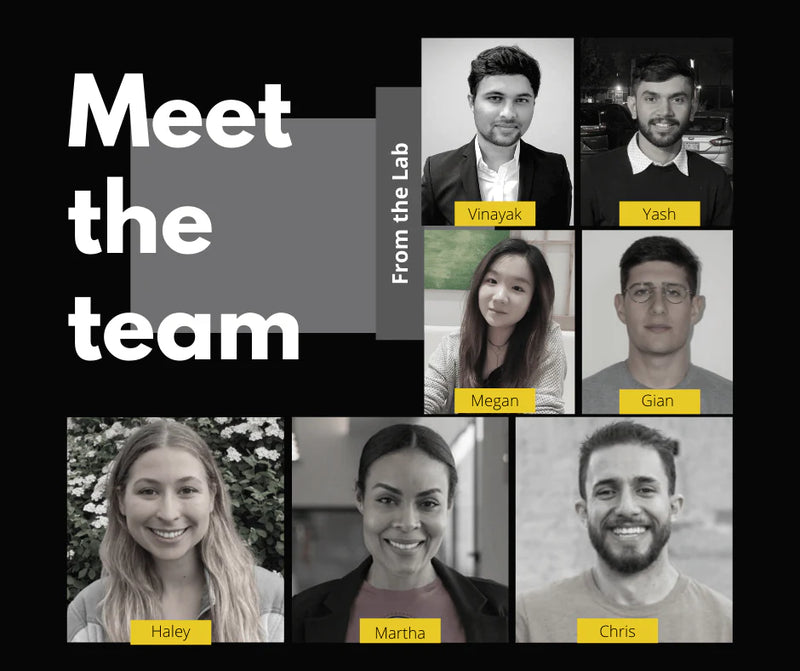
Research Fellowship
Opportunity
Most psychology students spend four years and $40,000 just to end up with a degree and zero real-world leverage. We’re changing that. At The Shared Secrets Lab, we give you the "Published Edge", a citable paper in the Journal of Gift Psychology that puts you in the top 1% of PhD applicants globally.
This isn’t a "coffee-runner" internship; it’s a backstage pass to the world’s #1 gifting-psychology R&D lab where you build a multichannel portfolio that makes you un-ignorable to future employers (including working full time with our lab). If you want a resume that actually works as hard as you do, apply now and stop researching in a vacuum.
Final Words
Market fit is critical for companies when selling or giving away their products.Geographic segmentation is an effective marketing tool that helps businesses target consumers accurately based on where they live.
For companies operating in specific regions, this strategy ensures that potential customers receive personalized marketing content. It also allows businesses to use their resources more efficiently.
A successful promotional giveaway can increase brand recognition and strengthen customer loyalty.It also serves as a representation of the company’s values and identity.
The ability to appeal to a targeted audience and offer products that meet customers’ needs can clearly differentiate a business from its competitors.
Megan Lee
Psychology Blogger,
The Shared Secrets Lab,
GiftAFeeling Inc.
Read The Official Research Paper On - Best promotional products for different geographical areas in Canada and USA
The Shared Secrets Lab
GiftAFeeling's Shared Secrets Lab (TSSL) is the world's #1 R&D lab focusing in gifting-psychology, particularly corporate gifts, promotional products, and branded merchandise. Led by industry SMEs, globe thought leaders, and psychologists, TSSL helps organizations pick products that are meaningful and kept, rather than getting tossed out!


