

Table of Contents
This study used perceived performance risk, promotion type, and size, and analyzed customers' perceptions of value and buy intentions through a cross-sectional experiment (Lowe, 2010).
The experimental method answers the call in the literature for more experimental research in pricing and sales promotion studies and offers more internal validity.
This includes exploring the psychology of free vs paid, as well as the freebies psychology, a critical aspect that influences consumer behavior in sales promotions.
Originality/Value
Numerous studies have looked at how consumers react to the layout of a promotional offer (e.g., discount size, absolute versus relative amounts, etc.)
Some research papers, however, have compared and contrasted how consumers respond to promotional offers that are both monetary and nonmonetary.
This study contributes by combining literature on perceived risk and literature on sales promotions to offer a more comprehensive theory of how consumers react to various promotional offers.
It is the first study to examine the moderating role of perceived performance risk on consumer perceptions of different promotional frames, particularly focusing on the psychology of free vs paid offers.
Keywords include Discounts, perceived performance risk, framing, and more free product marketing (Lowe,2010).
Why Your Corporate Gifts Are Failing (And How to Fix It) - Watch our TEDx Talk

Impact Marketing and Consumer Behavior
According to research, using branded products to advertise a brand significantly impacts consumer behavior.
A lot of customers admit that promotional products serve as their sole constant brand reminders and are the primary reason they continue to be loyal to a particular company.
Customers asserting that they would not hesitate to switch products merely to acquire a promotional item have been used by marketers to increase sales to capitalize on this new trend in marketing.
(Moser, 2016) This trend also reflects the psychology of free vs paid, where the perceived value of free items can heavily influence consumer loyalty.
How Promotional Products Are Used?
Brand recognition is the main goal of promotional items. However, marketing executives have discovered a method to leverage these products as a call to action, so this is not the sole application for them.
This naturally follows that the intended aim, which might be anything from boosting sales revenue to expanding brand exposure and recognition, is what drives how the items are used (Moser, 2016).
Where Impact Marketing Comes In
Whether you are a corporate entity or a small business client, Impact Marketing develops practical solutions for more effective marketing tactics, including understanding the freebies psychology, which plays a crucial role in consumer engagement and brand loyalty.
The level of competition among competing business interests makes marketing solutions more difficult. Smaller and less well-known brands are finding it harder to remain relevant in the marketplace, especially when they are unable to compete with more well-known names.
Impact Marketing & Design can help you create promotional plans for your goods (Moser, 2016).
Research implications/ Findings
The findings show that perceived risk has a distinct and strong moderating effect on customer value perceptions and preferences for additional free product promotions and price reductions. This underscores the importance of understanding freebies psychology in consumer behavior, particularly in how customers perceive and react to promotions.
Consumers tend to place more value on additional free product promotions than on discounts for goods with little performance risk, highlighting a key aspect of freebies psychology. The opposite is true for products with significant performance risk; in such cases, buyers place more value on price reductions than on additional free product promotions.
These results have implications for a wide range of product categories, including novel new products, goods with higher advertising levels, and other areas where perceived risk may fluctuate (Mela et al., 1997). The findings support and extend the current literature on sales promotions by showing that the theory applies well to low-performance-risk products but needs expansion for high-performance-risk products.
Because of this, managers and retailers should carefully structure promotions based on the level of risk consumers perceive (Mela et al., 1997). Overall, the results provide a clearer and more comprehensive understanding of the effects of different promotional forms.
How We Use Data to Pick Gifts People Actually Keep

Importance Of Sales Promotions
Both executives and scholars have recently begun to pay more attention to the topic of sales promotion. This growing interest stems from the recognition of the increasing importance of sales promotion activities in marketing strategy.
It was estimated that $60 billion was spent on consumer promotions in 1982, either directly through coupons, rebates, sweepstakes, and similar methods, or indirectly through payments to dealers or merchants who then used those funds to display or advertise products at a discount.
Developing effective sales promotion techniques and other closely related communication strategies requires an understanding of how customers respond to promotions (Gardner & Strang, 1984).
Consumer Response
Consumer response to promotions is being studied by an increasing number of researchers. However, results have been limited and inconsistent due to the use of various methodologies, focuses, and scientific paradigms.
By drawing on recent research in consumer scripts and consumer information processing, this paper proposes a model that integrates existing research and broadens our understanding of consumer response to promotions. A review of the theoretical paradigms used in this field precedes the discussion of the model (Gardner & Strang, 1984).
The findings support the hypothesis that as advertising and promotions increase and prices decrease, customers become more price- and promotion-sensitive (Mela et al., 1997).
Relationship with Advertiser & Business Impact
At trade exhibitions, conferences, or conventions, about six out of ten customers received promotional items from a business. This aligns with the psychology of free vs paid, as consumers were aware that the advertising aimed to promote a particular brand, company, or cause (55 percent).
Promotional items are also distributed to thank customers for their business (16 percent) or to directly encourage purchases (10 percent). Before receiving promotional items, the majority of consumers (88 percent) were already familiar with the marketer.
About half of the consumers had purchased from the marketer before obtaining the promotional items (55 percent). Additionally, 85 percent of those who received promotional items went on to do business with the advertiser.
Advertisers were also successful in attracting new customers who had never done business with them before (11 percent), demonstrating the psychology of free vs paid in consumer behavior.
Main Takeaways
Promotional items have a favorable influence on attitudes and behavior, which is a critical aspect of the psychology of free vs paid. Customer acquisition and retention are strongly correlated with the use of promotional products.
Advertisers should strategically employ this medium to foster loyalty, raise awareness, and encourage new trials.
To predict which products will be more appealing, practical, and easy to integrate into consumers' daily lives, advertisers and distributors of promotional products should monitor cultural and socioeconomic trends (The Influence of Promotional Products on Consumer Behavior, Relevant Insights, November 12).
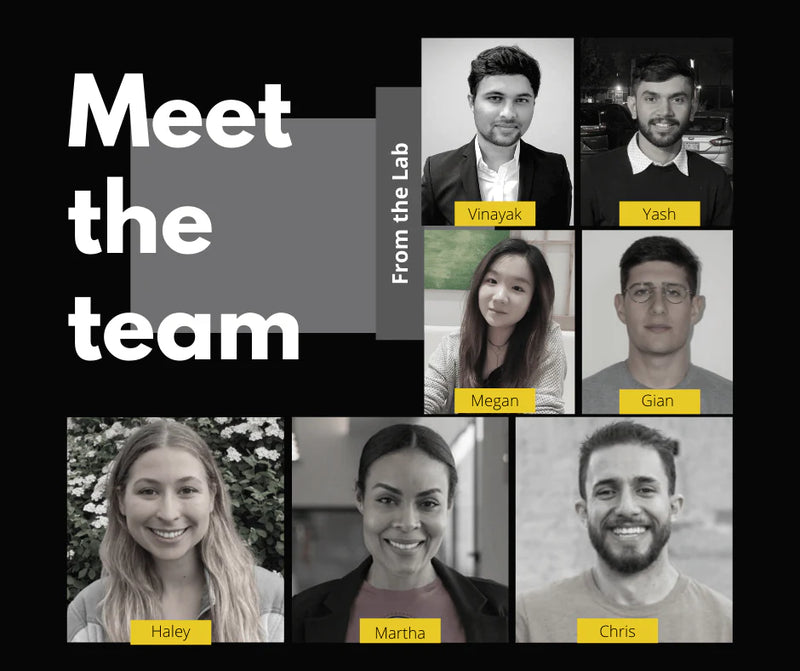
Research Fellowship
Opportunity
Most psychology students spend four years and $40,000 just to end up with a degree and zero real-world leverage. We’re changing that. At The Shared Secrets Lab, we give you the "Published Edge", a citable paper in the Journal of Gift Psychology that puts you in the top 1% of PhD applicants globally.
This isn’t a "coffee-runner" internship; it’s a backstage pass to the world’s #1 gifting-psychology R&D lab where you build a multichannel portfolio that makes you un-ignorable to future employers (including working full time with our lab). If you want a resume that actually works as hard as you do, apply now and stop researching in a vacuum.
Recall Of Promotional Products
Seven out of ten consumers remembered receiving at least one promotional item in the previous year, a phenomenon closely linked to freebies psychology. Similar findings were observed in earlier studies.
Seventy percent of respondents who recalled receiving promotional merchandise stated they received two or more items. The likelihood of remembering the marketer and message behind the first recalled promotional item is very high, influenced by freebies psychology.
While 88 percent of people could name the advertiser from a promotional product received in the previous 12 months, only 71 percent could name advertisers from a newspaper or magazine read a week earlier. This demonstrates the effectiveness of promotional products in enhancing brand recognition (The Influence of Promotional Products on Consumer Behavior, Relevant Insights, November 12).
Examples Of Recall Of Promotional Products
The most frequently recalled promotional goods advertisers include businesses in the financial services, retail, fashion, and electronics industries.
The following categories of promotional products are frequently remembered: wearable items (41 percent), including shirts (22 percent), caps or headwear (11 percent), outerwear (6 percent), and other wearables (7 percent).
Drinkware (35 percent) and writing instruments (19 percent) are also among the categories that benefit from the understanding of freebies psychology in driving recall (The Influence of Promotional Products on Consumer Behavior, Relevant Insights, November 12).
Key Takeovers
Promotional products are an effective way to develop and maintain brand awareness, as they reach a wide audience and have the potential to remain in consumers' minds. Unaided brand recall reflects brand strength because it relies on the capacity, organization, and accessibility of memory.
Brand recall can be influenced by interference from other products, the date of most recent exposure, and the quantity and nature of external retrieval cues. Promotional items can help reduce gaps in exposure and provide external cues that support brand memory.
To be effective, they should be offered frequently, clearly connected to the brand, and relevant to the customer (The Influence of Promotional Products on Consumer Behavior, Relevant Insights, November 12). Research has also shown that high anxiety related to gift-giving may negatively affect relationships.
Conclusion
Promotional goods are frequently seen and used by consumers, reflecting the psychology of free vs paid in marketing strategies.
Advertisers can increase opportunities to build and sustain brand recognition by offering practical promotional items that can be naturally integrated into consumers' daily lives, rather than serving only as contact information references.
To extend their reach beyond the target audience and make sharing easier, promotional products should be positioned as “gifts for family and friends.”
Jesse Siambi
Psychology Blogger,
The Shared Secrets Lab,
GiftAFeeling Inc.
FAQs
What is the psychology behind freebies?
The psychology behind freebies lies in the human tendency to feel appreciated and valued when receiving something for free. It creates a sense of goodwill and often triggers the reciprocity principle, where recipients feel inclined to return the favor, possibly through loyalty, purchases, or positive word-of-mouth.
What is the psychology behind giveaways?
The psychology behind giveaways taps into the excitement of receiving something free, creating a positive association with the brand.
It leverages the reciprocity principle, where recipients feel a subconscious urge to return the favor, often through increased engagement or purchases. Giveaways also stimulate social sharing, broadening brand exposure.
Why is free so attractive?
"Free" is attractive because it offers a risk-free opportunity to try something new without financial commitment.
It appeals to our desire for a good deal and triggers a positive emotional response. The allure of getting something for nothing is a powerful motivator, often leading to increased interest and engagement.
Why is freebies important?
Freebies are important as they create a positive first impression and build goodwill towards a brand.
They encourage trial, increase brand awareness, and often lead to future sales through the principle of reciprocity. Freebies also enhance customer experience and can turn casual browsers into loyal customers.
How does price affect consumer buying behavior?
Price significantly impacts consumer buying behavior. It influences perceived value; higher prices may suggest better quality, while lower prices can attract budget-conscious shoppers.
Consumers often weigh price against need, quality, and brand reputation. Pricing strategies, like discounts or premium pricing, can also sway purchase decisions, aligning with various consumer preferences.
What is free freebies?
"Free freebies" are complimentary items or services given without cost to the recipient. They serve as a marketing tool, creating goodwill and increasing brand awareness.
These no-charge giveaways are often used to attract new customers, reward loyalty, and provide a taste of what a brand or product offers.
Read The Official Research Paper On - The Psychology of Free vs Paid: Understanding Consumer Behavior in Promotions
The Shared Secrets Lab
GiftAFeeling's Shared Secrets Lab (TSSL) is the world's #1 R&D lab focusing in gifting-psychology, particularly corporate gifts, promotional products, and branded merchandise. Led by industry SMEs, globe thought leaders, and psychologists, TSSL helps organizations pick products that are meaningful and kept, rather than getting tossed out!


