

Table of Contents
Humans have been around for a long time, during which inventions have been made, structures have been built, and evolution has occurred dramatically. Originality is often defined as “the power of independent thought or constructive imagination” or “being the first instance or source from which a copy, reproduction, or translation is or can be made” (Merriam-Webster).
However, it is difficult to imagine things that have not yet been conceived. This presents a challenge for many industries. In maintaining company success, promotion and awareness are essential, often achieved through promotional products.
Not only must the company itself be original to succeed, but its promotional products must also reflect originality. This raises the question of what makes them different and unique.
This research paper explores the elements that create unique giveaway products that contribute to company success. It begins by examining a company’s message and purpose, then analyzes the relationship between promotional products and that purpose, and finally explores the role of customers.
The Purpose of a Company
To be unique in promoting one’s business does not begin with promotional products, but with the company’s purpose and message. Companies achieve success when they have a clear message and defined purpose.
Most companies’ messages and purposes can be found on their websites. For example, Ben & Jerry’s states: “We love making ice cream—but using our business to make the world a better place gives our work its meaning. Guided by our Core Values, we seek in all we do, at every level of our business, to advance human rights and dignity, support social and economic justice for historically marginalized communities,”
Purpose acts as a motivational and engaging force for employees and their audience. Research has shown that companies that have a strong purpose perform better on the stock market. In a study with 20,000 employees, 100% were more likely to stay in the organization when the leaders were clear about the purpose (Meister & Bach, 2021).
Why Your Corporate Gifts Are Failing (And How to Fix It) - Watch our TEDx Talk

Promotional Products
After defining its purpose and message, it has to have a product. For example, for Starbucks, it is coffee, and for Budweiser, it is beer. Now, the company has a purpose and a product but to be successful; promotion is needed. Promotional products are the answer, but it can’t just be any product. Many companies resort to the basics, such as water bottles, keychains, writing tools, and products of that sort. However, it is not unique and does not grab people’s attention. The promotional products must be personal to the company, align with its purpose and product, and be useful. Several examples (Mertes, 2022):
The Budweiser Goal-Synced Glass lights up when your favorite team scores.
IAMS Frisbee for Dogs looks like 10kg weights to promote its dog food for healthy and “strong” dogs.
KFC Colonel Sanders Pool Float has two hand-shaped cup holders for a bucket of fried chicken and a drink.
These examples are quite creative, but it can also be as simple as Starbucks mugs that are personalized to each city. All these promotional products have in common that they relate to the company’s purpose and original product in a way. They promote the company through useful and personal products but in a fun and quirky way.
How We Use Data to Pick Gifts People Actually Keep

Customer Feedback
Customers play a vital role in the continuation and success of the company. They help promote and purchase the products, which keeps the company standing. Thus, the company has to create a strong relationship with its audience.
This is done by welcoming feedback and knowing one’s audience. Welcoming feedback from its customers allows for development and progress. In essence, there is no better and more reliable source about a company and its products than customer feedback.
This shows that the company values and appreciates its customers. The appreciation found on both ends creates this cycle of feedback and response. Additionally, the company needs to know its audience. This can mean an average age range or profession in which they attract.
For example, Tim Hortons, a Canadian multinational fast-food chain, attracts an extensive and varied audience. As a promotional product, they have done two collaborations with pop artist Justin Bieber for their coffee and donuts. This product attracts younger ages, but as their product is useful to everyone, it works with everyone.
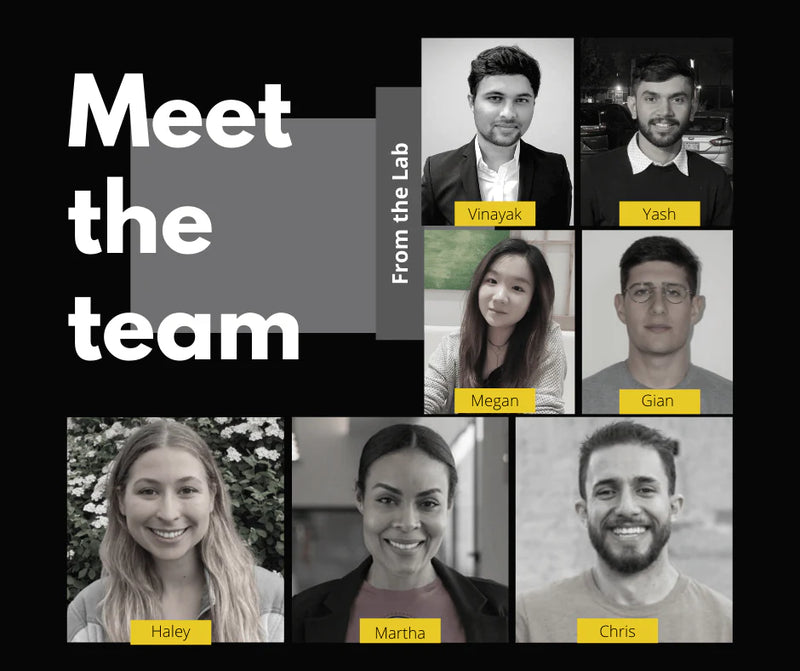
Research Fellowship
Opportunity
Most psychology students spend four years and $40,000 just to end up with a degree and zero real-world leverage. We’re changing that. At The Shared Secrets Lab, we give you the "Published Edge", a citable paper in the Journal of Gift Psychology that puts you in the top 1% of PhD applicants globally.
This isn’t a "coffee-runner" internship; it’s a backstage pass to the world’s #1 gifting-psychology R&D lab where you build a multichannel portfolio that makes you un-ignorable to future employers (including working full time with our lab). If you want a resume that actually works as hard as you do, apply now and stop researching in a vacuum.
Conclusion
Consumer response to promotions is being studied by an increasing number of researchers. However, results have been limited and inconsistent due to the use of various methodologies, focuses, and scientific paradigms.
By drawing on recent research in consumer scripts and consumer information processing, this paper proposes a model that integrates existing research and broadens our understanding of consumer response to promotions. A review of the theoretical paradigms used in this field precedes the discussion of the model (Gardner & Strang, 1984).
The findings support the hypothesis that as advertising and promotions increase and prices decrease, customers become more price- and promotion-sensitive (Mela et al., 1997).
Ally Hatcher
Psychology Blogger,
The Shared Secrets Lab,
GiftAFeeling Inc
Read The Official Research Paper On - How can one be different in a world where everyone is giving away promotional products?
The Shared Secrets Lab
GiftAFeeling's Shared Secrets Lab (TSSL) is the world's #1 R&D lab focusing in gifting-psychology, particularly corporate gifts, promotional products, and branded merchandise. Led by industry SMEs, globe thought leaders, and psychologists, TSSL helps organizations pick products that are meaningful and kept, rather than getting tossed out!


