
A construction company can take years to build its reputation, but poor-quality or ill-suited workwear can undermine that image the moment a crew arrives on-site. The real challenge is not simply choosing construction workwear. It's building a workwear program that keeps employees properly equipped for the job, supports safety requirements, maintains a consistent company image, and reduces the need for frequent replacement orders.
When apparel, sizing, branding, and job site essentials are selected around the realities of each role and work environment, the entire program performs better. A framer working at height has different requirements than a foreman meeting clients on a commercial site. Matching workwear to those needs helps crews stay comfortable, look professional, and remain ready for the work ahead while creating a scalable program that's easier to manage as your workforce and projects continue to grow.
At GiftAFeeling, we help construction companies choose apparel, workwear, and job site essentials that align with their budgets and operational requirements. Every recommendation considers the work environment, safety needs, fabric quality, intended use, and branding goals. With 106+ unique imprinting techniques available, we can match each garment or product with the decoration method best suited to its material, application, and your vision. Whether it's embroidery for jackets and caps, screen printing for larger apparel runs, or heat transfers for detailed logos, employee names, and technical fabrics, every recommendation is made with long-term performance in mind. The goal is to choose a decoration method that keeps your branding looking professional, withstands regular wear, and delivers better value over time.
What Construction Apparel, PPE, and Safety Essentials Are Needed for Different Job Site Hazards?
Construction workwear should be selected based on the hazards employees face, not just the type of project. Different tasks expose workers to different risks, including low visibility, electrical hazards, sharp materials, harsh weather, and roadside traffic. Choosing the right apparel and PPE for each work environment improves safety, employee comfort, and productivity while supporting compliance with applicable Canadian safety standards.
High-Visibility Workwear
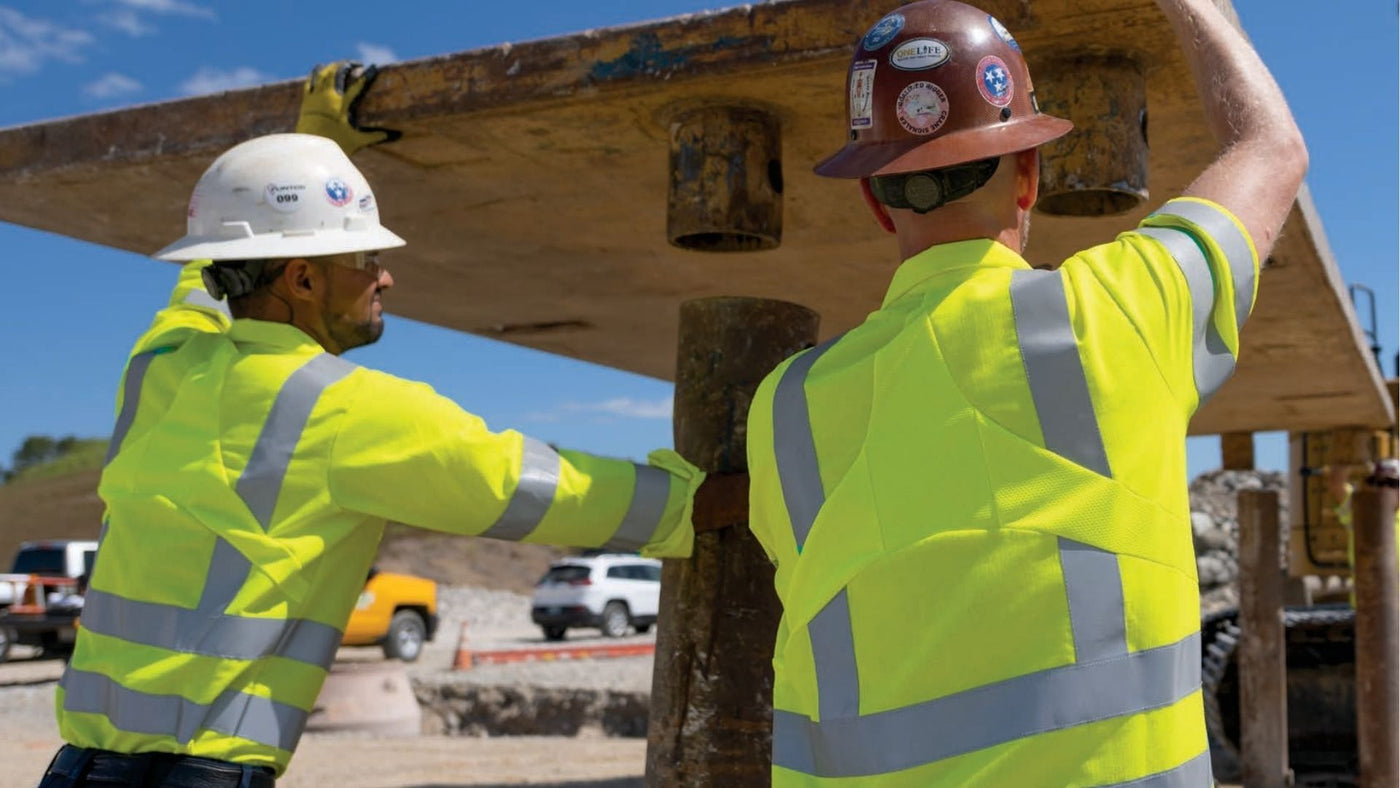
High-visibility workwear is essential wherever employees work near moving vehicles, heavy equipment, or low-light conditions. The right garment depends on where the work is performed, the level of traffic exposure, and the season. Lightweight moisture-wicking shirts help crews stay comfortable during warmer months, while insulated jackets and hoodies maintain visibility during colder weather. For Canadian job sites, choose apparel that meets CSA Z96 requirements where applicable and look for garments that remain comfortable enough for employees to wear throughout an entire shift.
FR & Arc Rated Workwear
Workers exposed to arc flash, flash fires, or combustible hazards require flame-resistant (FR) and arc-rated apparel that matches the specific risks of their job. Electricians, utility crews, industrial maintenance teams, and energy contractors often have different protection requirements, so selecting apparel should always begin with a proper hazard assessment. Breathability, mobility, and garment weight are just as important as the protection rating because employees are more likely to wear apparel consistently when it is comfortable throughout the workday.
Cut & Impact Protection
Choosing the right gloves starts with understanding the task, not buying the highest protection rating available. A worker handling sheet metal or glass requires different protection than someone operating heavy equipment or tying rebar. Consider cut resistance, impact protection, grip, abrasion resistance, and dexterity before making a decision. Gloves that are too bulky or restrictive often reduce productivity, while task-specific hand protection helps improve both safety and comfort during long shifts.
Waterproof & Weather-Resistant Workwear
Not every waterproof jacket performs the same on a construction site. A garment that keeps rain out but traps heat and moisture inside can quickly become uncomfortable, leading employees to remove it before the job is finished. Look beyond waterproof claims and consider breathability, seam construction, ventilation, and layering compatibility. Weather-resistant apparel that balances protection with comfort helps crews remain productive in changing Canadian weather conditions.
Thermal & Cold Protection
Cold-weather workwear should provide warmth without restricting movement or creating unnecessary bulk. Instead of relying on one heavy jacket, many construction companies use a layering system consisting of a moisture-wicking base layer, an insulating mid-layer, and a wind or waterproof outer shell. This approach allows employees to adapt to changing temperatures throughout the day while remaining comfortable, productive, and protected during winter work.
Vehicle & Roadside Safety Essentials
Construction vehicles should be equipped for both planned work and unexpected roadside emergencies. Warning triangles, first aid kits, fire extinguishers, emergency lighting, spill response kits, and traffic control equipment all contribute to a safer response when incidents occur. Standardizing safety equipment across every service vehicle also helps ensure that crews remain prepared regardless of which truck arrives on-site.
How Should Construction Uniforms and Workwear Be Branded?
A logo can look perfect in a digital proof and still fail once it is applied to the wrong garment. Construction workwear faces repeated washing, abrasion, weather exposure, and daily movement, so the decoration method matters almost as much as the apparel itself. The right choice depends on the fabric, garment construction, logo detail, placement, expected lifespan, and any safety features that must remain unobstructed. With more than 106 imprinting techniques available, GiftAFeeling recommends the method that best suits the garment, work environment, and branding goals rather than applying the same process to every product.
When Is Embroidery the Better Choice?
Embroidery is a strong choice for jackets, polos, caps, and heavier workwear, particularly for left-chest logos, employee names, and smaller designs that need to retain their shape through regular wear.
It is not always the right option for lightweight performance fabrics, waterproof materials, or oversized back logos. Large stitched designs can add stiffness, weight, or puckering, so the stitch count, backing, size, and placement should always be matched carefully to the garment.
When Does Screen Printing Make More Sense?
Screen printing is often the most cost-effective option for larger orders of T-shirts, hoodies, sweatshirts, and high-visibility apparel. It produces bold logos and consistent colour coverage without adding the weight of embroidery.
Fabric still matters, though. A heavyweight cotton hoodie and a lightweight moisture-wicking shirt require different inks, curing temperatures, and production methods. Choosing the wrong combination can lead to premature cracking, fading, distortion, or poor adhesion.
When Should You Choose Heat Transfers?
Heat transfers are a practical choice when garments require employee names, department identifiers, detailed logos, smaller quantities, or frequent replacement pieces. They can also perform well on stretch, technical, and waterproof fabrics that may not suit embroidery or traditional screen printing.
The transfer material, adhesive, temperature, pressure, and application process must match the fabric. Getting these details right helps the decoration remain flexible, durable, and securely bonded without affecting the garment’s performance.
Where Should Logos Be Placed?
The left chest remains one of the most common placements because it looks professional, stays visible, and works across most garment styles. Larger back logos can make crews easier to identify across busy job sites, while sleeve decoration can be used for departments, certifications, project names, or employee roles.
Placement should also account for pockets, seams, harnesses, reflective striping, ventilation panels, and areas exposed to frequent abrasion. A logo placed where equipment repeatedly rubs against it may wear faster, regardless of how well it was applied.
Can High-Visibility, FR, and Arc-Rated Garments Be Decorated?
High-visibility, flame-resistant, and arc-rated garments can often be decorated, but they require additional review. Branding should never cover reflective materials, interfere with visibility, damage protective construction, or conflict with manufacturer instructions.
Some garments may also require compatible threads, inks, transfers, or placement methods to maintain their intended performance. Reviewing the garment specifications and work environment before production helps protect both safety and appearance.
What Should Be Confirmed Before Production?
Most reorder problems begin with one small detail that was not documented during the first order, such as an outdated logo file, a slightly different thread colour, inconsistent placement, or unclear employee-name formatting.
Before production, confirm the approved logo file, brand colours, decoration size, placement, garment colour, name format, and requirements for future reorders. Creating a repeatable branding standard helps keep every crew, department, location, and new-hire order consistent as the company grows.
The goal is not to choose the most elaborate imprinting technique. It is to select the method that suits the garment, performs under real working conditions, and keeps your company looking consistent across every job site.
FAQs
What is the standard turnaround time for a bulk order of branded construction industry promotional products?
For most bulk orders, the standard production time is 10 to 14 business days after the final artwork has been approved. However, we know the construction world moves fast and deadlines are often non-negotiable.
- Standard Lead Time: 10 to 15 business days for most catalog items.
- Apparel and Headwear: 12 to 15 business days due to setup for embroidery.
- Rush Orders: Available for specific items like safety vests or basic pens, often shipping in 1 to 2 business days.
What decoration methods are available for branded construction promotional products?
We offer heavy-duty imprinting methods specifically chosen for their ability to survive the harsh environments of a construction site.
| Decoration Method | Best For | Durability |
| Laser Engraving | Metal tools, knives, and tumblers | Permanent / Lifetime |
| High-Density Embroidery | Carhartt jackets, beanies, and caps | Extremely High |
| Screen Printing | Safety vests and t-shirts | High (UV resistant inks) |
| Pad Printing | Hard hats and safety glasses | Moderate to High |
| Debossing | Leather tool belts and portfolios | High (Weatherproof) |
What branded items are appropriate for construction company client gifts at bid award or project handover events?
Project handovers are the perfect time to solidify a long-term relationship. You want a gift that celebrates the milestone and reflects the quality of the build.
- Bid Award Gifts: High-end architectural scales, premium metal pens for signing contracts, or personalized leather portfolios.
- Project Handover: Custom-engraved wood or glass awards, premium outdoor gear (like high-end coolers), or a "Maintenance Kit" featuring branded tools.
- The "Legacy" Gift: A high-quality, framed site photo paired with a branded executive desk set to keep your company in their office for the next project.

